
NTPC to be the worst hit, stock slides to five-year low on announcement.

'Investors should be careful in getting carried away; although a reversal of IPO frenzy this time is taking longer than in the past.'

American brokerage firm Morgan Stanley on Thursday sharply cut its India FY23 real GDP growth estimate to 7.9 per cent, mainly due to the impact of the Russia-Ukraine conflict on oil prices. Analysts at the brokerage also raised their inflation forecast to 6 per cent - the upper end of the tolerance band for the RBI - and flagged stagflation risks because of the ongoing events. "We believe that the ongoing geopolitical tensions exacerbate external risks and impart a stagflationary impulse to the economy," they said. It can be noted that stagflation involves a stagnancy in output or growth, coupled with high inflation.
A swift recovery in oil demand in India is not only helping the stability of the global market, it is giving huge fiscal headroom to the government in terms of additional excise duty.
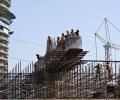
Lack of political consensus on economic reforms a key concern.

Normal or unbranded diesel currently attracts basic excise duty of Rs 1.46 a litre and an additional excise duty of Rs 2 per litre.
The GST Council might on Friday consider taxing petrol, diesel and other petroleum products under the single national GST regime, a move that may require huge compromises by both central and state governments on the revenues they collect from taxing these products. The Council, which comprises central and state finance ministers, in its meeting scheduled in Lucknow on Friday, is also likely to consider extending the time for duty relief on COVID-19 essentials, according to sources in the know of the development. GST is being thought to be a solution for the problem of near-record high petrol and diesel rates in the country, as it would end the cascading effect of tax on tax (state VAT being levied not just on the cost of production but also on the excise duty charged by the Centre on such output).
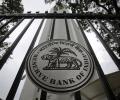
The non-food component in the price basket will continue to keep inflation at a high level and result in a "long pause" in interest rates, a foreign bank said on Wednesday. The central bank is likely to pare the pandemic-driven emergency response as well, the report by Singaporean lender DBS said. It can be noted that the high inflation driven by the food prices has forced the RBI to go for a status quo in rates for the three consecutive reviews of the bi-monthly policy meetings, even as growth continues to be in the negative territory.

The government should not go in for an 'aggressive fiscal consolidation' in the upcoming Budget as global risks have not abated, RBI Monetary Policy Committee (MPC) Member Ashima Goyal said on Wednesday. Goyal further said subsidies are expected to come down as food and energy inflation moderates. WPI inflation in food articles in November was 1.07 per cent against 8.33 per cent in the previous month.

'Q1 is going to bear the brunt of the second wave, exposing full-year GDP forecasts to downward revisions, unless phase-3 of vaccination is executed quickly.'

Gold jewellery demand in India is likely to decline in the second and third quarters of this fiscal due to hike in import duty, high volatility in prices and inflationary pressure, according to a report. While demand is likely to contract by 8 per cent year-on-year in the second quarter of FY23, the decline is expected to be higher at 15 per cent in the third quarter due to the exceptionally high base in the same period of FY22, Icra said in a report. According to the report, the exceptional third quarter performance in FY22 was due to the post-Covid reopening of the economy and the substantially high demand in the wedding and festive seasons.

The seasonally adjusted India Services Business Activity Index rose from 45.4 in July to 56.7 in August, as the reopening of several establishments and increased consumer footfall boosted sales. The services sector witnessed the first expansion in output in four months and a rebound in business confidence.

The basket of crude oil India buys from overseas markets averaged $68.07 per barrel in September as against the August average of $71.98 a barrel.

India abstained in the United Nations General Assembly on a draft resolution calling for Russia to be held accountable for violations of international law by its invasion of Ukraine and requiring Moscow to pay reparations to Kyiv for damages, loss and injury resulting from the war.

Public sector oil marketing companies currently lose Rs 11.65 per litre on diesel.

Experts expect a net loss of Rs 26.7 billion for IndiGo and Rs 10.1 billion for SpiceJet in Q1FY21 driven by low traffic volume, low fleet utilisation and poor coverage of fixed costs.

India's factory output climbed 22.4 per cent in March, benefiting from the base effect of the lockdown-marred month a year back as well as a turnaround in the manufacturing sector, while retail inflation slipped to a three-month low of 4.29 per cent in April. The high positive annual growth in the index of industrial production (IIP) in March 2021 came on back of a contraction of (-)0.9 per cent and (-)3.4 per cent in January and February 2021 respectively, according to the data released by the National Statistical Office (NSO) on Wednesday. This turnaround was led by recovery in the mining, manufacturing and electricity sectors.

With a revival in demand and consumption, FMCG companies are looking forward to 2022 with positivity and hopes of sustaining a healthy growth trend across both rural and urban markets while gearing up to cater to the ever-increasing digitally active consumers and tackle the challenge of higher commodity prices. Health and wellness and convenience are going to remain key trends and FMCG companies are strengthening their core brands, driving premiumisation across their portfolios with targeted innovations as consumers are gravitating towards trusted brands looking for quality, purity and hygiene, in continuation of the trend that started since the pandemic last year. FMCG makers are accelerating digitalisation and are investing in building capability in e-commerce and Direct-to-Consumer channels, identifying it as a key vector of their growth as the threat of a possible third wave is still not away.

Higher power tariff would have fetched Tata's Mundra UMPP Rs 25,000 crore (Rs 250 billion) and Adani's project an additional Rs 18,500 crore (Rs 185 billion)

'There will be a series of rate hikes, but the pace and quantum will depend on how the economy in the US and the rest of the world behave.'
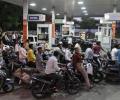
Not only do you need an effective and independent regulator, you also need competition to flourish.
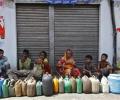
The staggered increase in kerosene rate may not have the same impact of freeing up the fuel price as for diesel.

A greater payment security mechanism for power generation companies to ensure timely payouts for supply of electricity will be in focus in 2022 as stricter rules are on the anvil for 24x7 power supply amid discoms' outstanding dues at a whopping Rs 1.56 lakh crore. Mounting outstanding dues of distribution companies (discoms) to electricity generation companies (gencos) have been a perennial issue affecting the entire value chain in the power sector and are also a hindrance for the ambitious goal of 24x7 power supply across the country even when the payment for coal is made in advance. The situation persists despite the fact that discoms' dues become overdue after 45 days of generating bills and they also have to pay penal interest on the overdue amount in most of the cases to gencos.

In its latest report for the office market, property consultant Cushman and Wakefield said the total seats leased by enterprises could cross 50,000 during the 2021 calendar year. Enterprises had leased 18,213 seats in the first six months of the 2020 calendar year and 36,255 desks during the entire last year.

According to a new subsidy sharing formula, the payout of upstream oil producers like ONGC is to be reduced to the extent of Rs 4,500 per tonne oil development cess they pay to the government, sources privy to the development said.
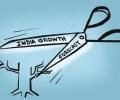
India's projected economic growth for 2022 has been downgraded by over two per cent to 4.6% by the United Nations, a decrease attributed to the ongoing war in Ukraine, with New Delhi expected to face restraints on energy access and prices, reflexes from trade sanctions, food inflation, tightening policies and financial instability, according to a UN report released on Thursday. The UN Conference on Trade and Development (UNCTAD) report downgraded its global economic growth projection for 2022 to 2.6 per cent from 3.6 per cent due to shocks from the Ukraine war and changes in macroeconomic policies that put developing countries particularly at risk. The report said while Russia will experience a deep recession this year, significant slowdowns in growth are expected in parts of Western Europe and Central, South and South-East Asia.
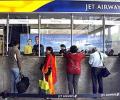
Airfares are at an all-time low because of fall in crude oil prices.

Indian airlines are expected to post a consolidated loss of $4.1 billion this fiscal, similar to what they are estimated to have incurred in 2020-21, taking the total losses of two years to around $8 billion as a result of the pandemic so far, aviation consultancy and research firm CAPA said on Thursday. In a report, CAPA expects domestic passenger traffic to be around 80-95 million in 2021-22 as against 52.5 million in the previous financial year. However, despite this growth, it will be well below than around 140 million passenger volumes recorded in 2019-20, CAPA said in the report. This projection of the traffic volume does not take into account the anticipated third wave of the pandemic, it added.

Diesel price was on Monday hiked by 50 paise per litre, excluding VAT, with effect from midnight tonight.

Profit on sale of diesel swelled to Rs 1.90 per litre as oil ministry awaits return of Prime Minister Narendra Modi to cut rates.
ITC has extensively reset its strategy and will explore opportunities to craft disruptive business models to set up structural drivers helmed by digital and sustainability for its next horizon of growth and make the company future-ready, chairman Sanjiv Puri said on Wednesday. The company is pursuing an accelerated journey to build a dynamic utureTech' enterprise by investing in cutting-edge digital technologies to shape a new paradigm of competitiveness, create innovative business models and tap newer opportunities, he said while addressing shareholders at ITC's virtual annual general meeting. As part of the next horizon vision, the company is "proactively exploring inorganic opportunities" even as it has shrunk "business segments that were incongruent to our growth aspirations, such as the Lifestyle Retailing Business" while the existing growth platforms comprising megabrands will be scaled up and fortified.

'In the overall global portfolio, India's weighting has come down in the past seven months.'
Oil and Natural Gas Corporation will shell out Rs 5,023 crore (Rs 50.23 billion) to subsidise kerosene and LPG in the second quarter of current fiscal.

'The recent correction in indices has made the markets cheaper to invest for the long term.'

The government is considering a 3-rupee to 5-rupee hike in the price of diesel, which accounts for more than 40 percent of fuel use, government officials said last week, as the country looks to cut import costs by nearly $20 billion to trim a record current account deficit.

Studies suggest net benefits of hydro-power, nuclear energy or natural gas as sources of electricity are greater than those of wind and solar.

State-owned fuel retailers, who control 95 per cent of the petrol pump sales, sell diesel at government-fixed rates, which are way lower than the cost of production.

State-run oil marketing companies Indian Oil, Hindustan Petroleum and Bharat Petroleum are likely to lose Rs 45,478 crore (Rs 454.78 billion) this fiscal on selling fuel below cost, Petroleum Minister Murli Deora said.

Amid fears of a third wave of coronavirus pandemic and hardening of retail inflation, the Reserve Bank is likely to maintain status quo on interest rate and watch the developing macroeconomic situation for some more time before taking any decisive action on monetary policy. The RBI is scheduled to announce its bi-monthly monetary policy review on August 6 at the end of the three-day meeting -- August 4-6 -- of the Monetary Policy Committee (MPC). The RBI Governor-headed six-member MPC decides on the key policy rates.

Indian service sector output broadly stabilised in September but remained in the contraction zone as incoming new business fell moderately due to the damaging impact of the pandemic on demand, leading to more job losses.
